 Altınok
Why does machine embroidery pucker after unhooping or washing?
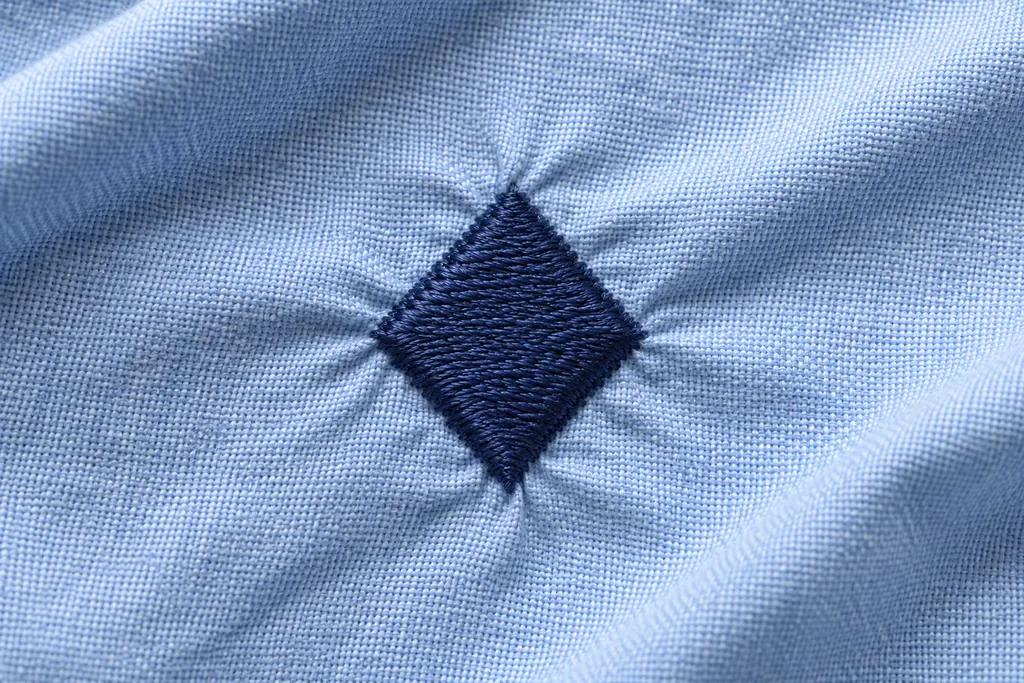
Record when the first ripple appears. Puckering immediately after unhooping can point to fabric stretched in the frame. Puckering confined to dense fill calls for a check of the design and backing together. A change after washing needs a comparison with an unembroidered swatch.
If ripples appear when the hoop comes off
Put two removable reference marks outside the design on a test piece. Check whether the distance between them grows as the fabric goes into the frame. Hoop a second piece at its relaxed dimensions while keeping it secure. Keep the file and backing the same for this comparison.
If only the edge of the fill puckers
Compare a simple outline with a dense fill on the same piece. If the outline sits flat, ask the digitizer to review the density and stitch direction in the affected area. In a separate trial, run the original file with a different backing. Changing both at once makes the result difficult to interpret.
If puckering starts after the first wash
Wash an unembroidered offcut from the same fabric lot alongside the embroidered sample, following the garment care instructions. Compare overall shrinkage with distortion around the design. On a stretchy tee, test whether leaving permanent support behind the embroidery improves the result.
What should you record for the next run?
- Record the fabric, backing code and type, hoop and file revision. Change one setting per run.
- Photograph the piece flat before unhooping, after release and after washing, from the same angle.
- Record where the ripple starts, whether the outline still meets the fill, and how the reverse feels. Send these details with the sample if you need help choosing a backing.